
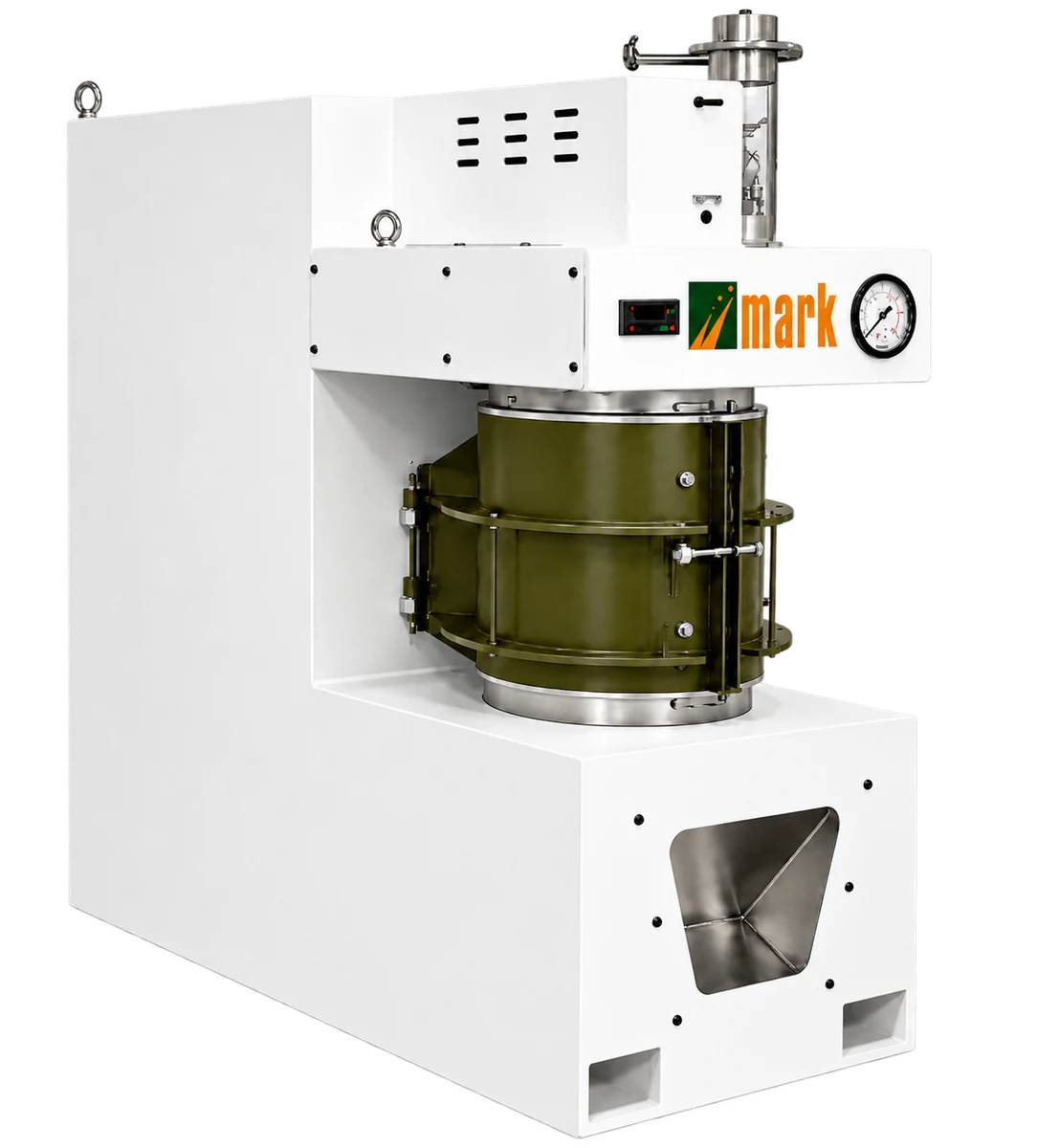
Trichromatic RGB sensing
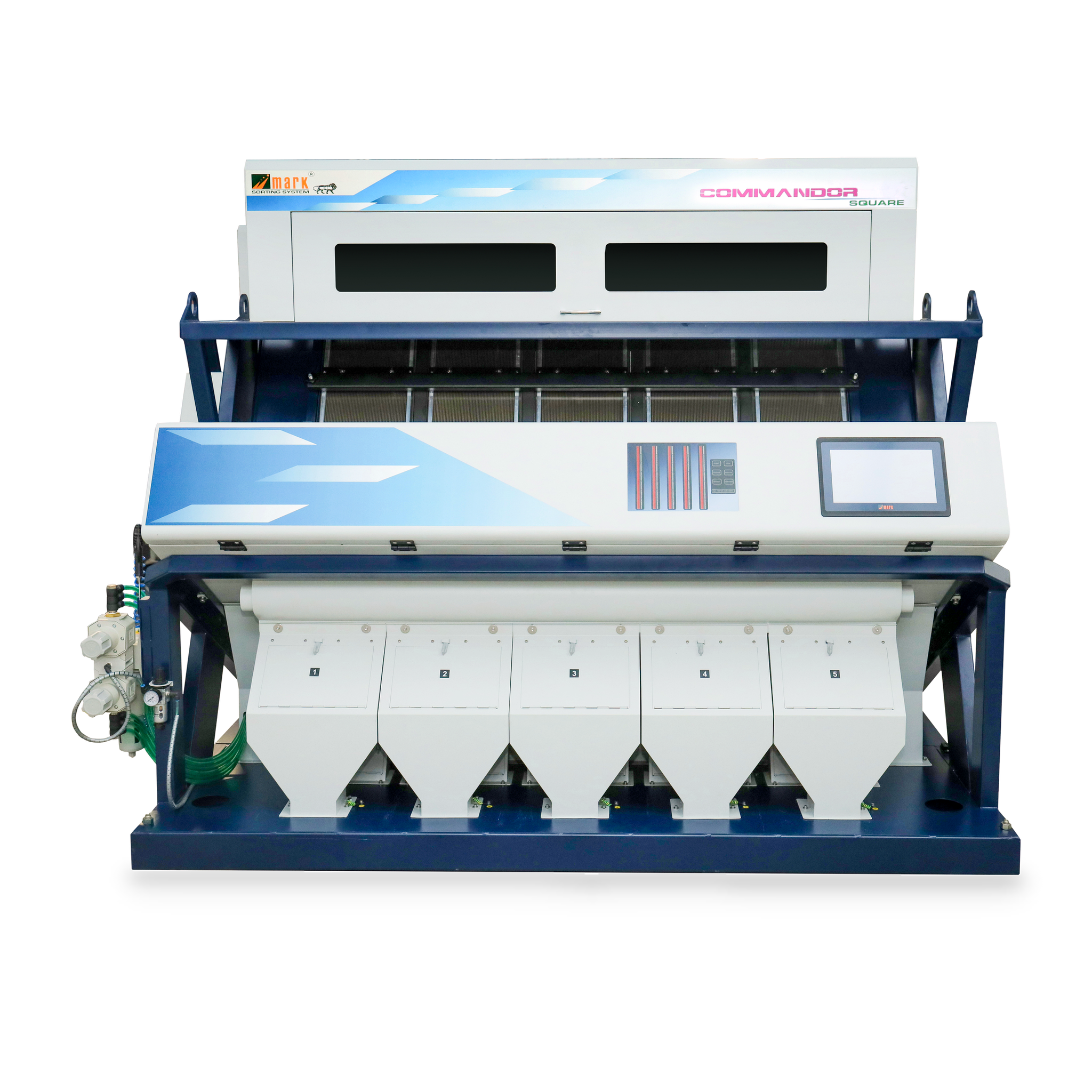
The supplied T20 Square and COMMANDOR Square brochures describe 5,400 × 3 RGB sensing. Illumination, image acquisition and camera settings bring visible material differences into view.
Explore colour sensing →The supplied T20 Square and COMMANDOR Square brochures describe 5,400 × 3 RGB sensing. Illumination, image acquisition and camera settings bring visible material differences into view.
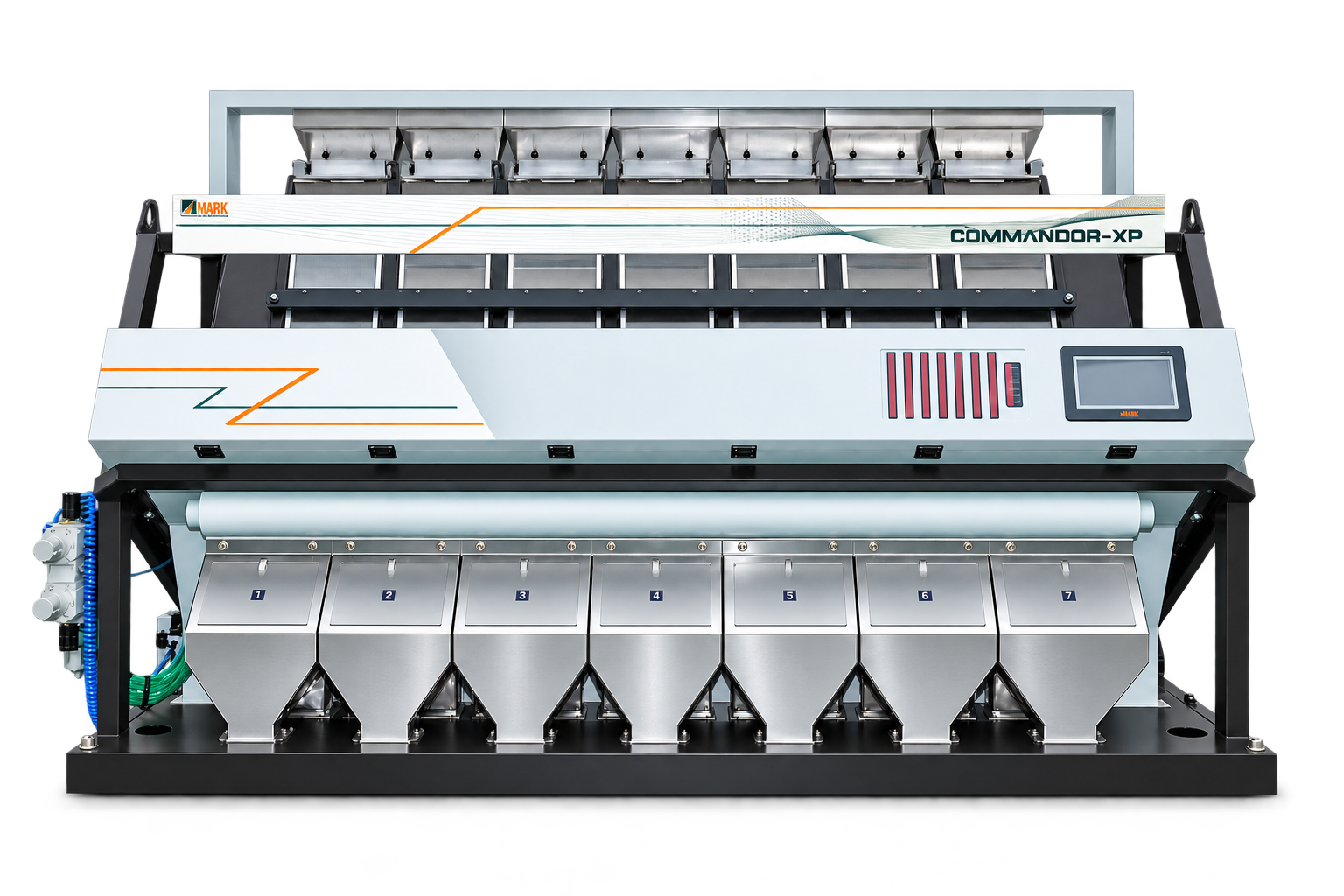
Explore colour sensing →COMMANDOR Square describes analysis of colour, shape and brightness, with study-data classification. RIGG specializes in size and hole recognition.
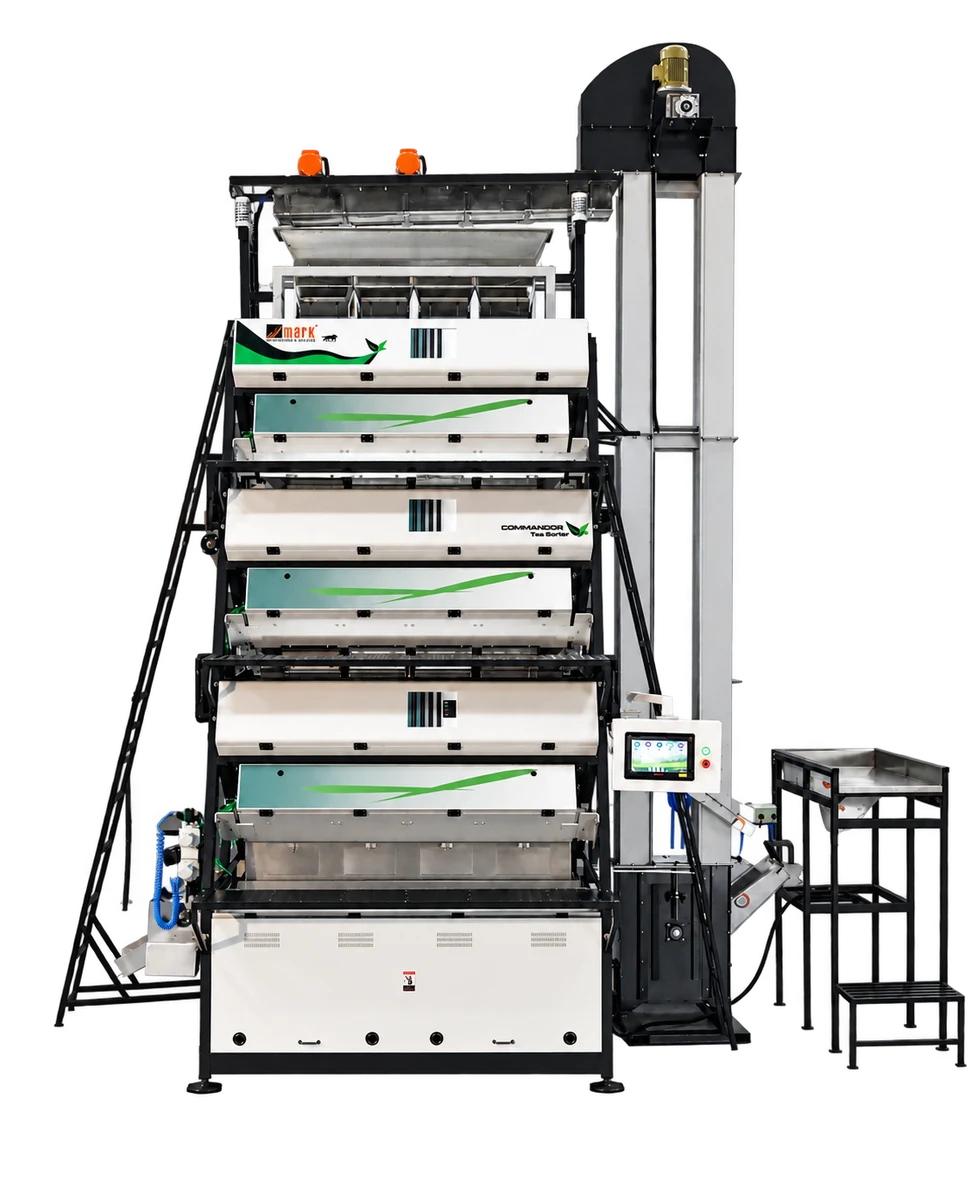
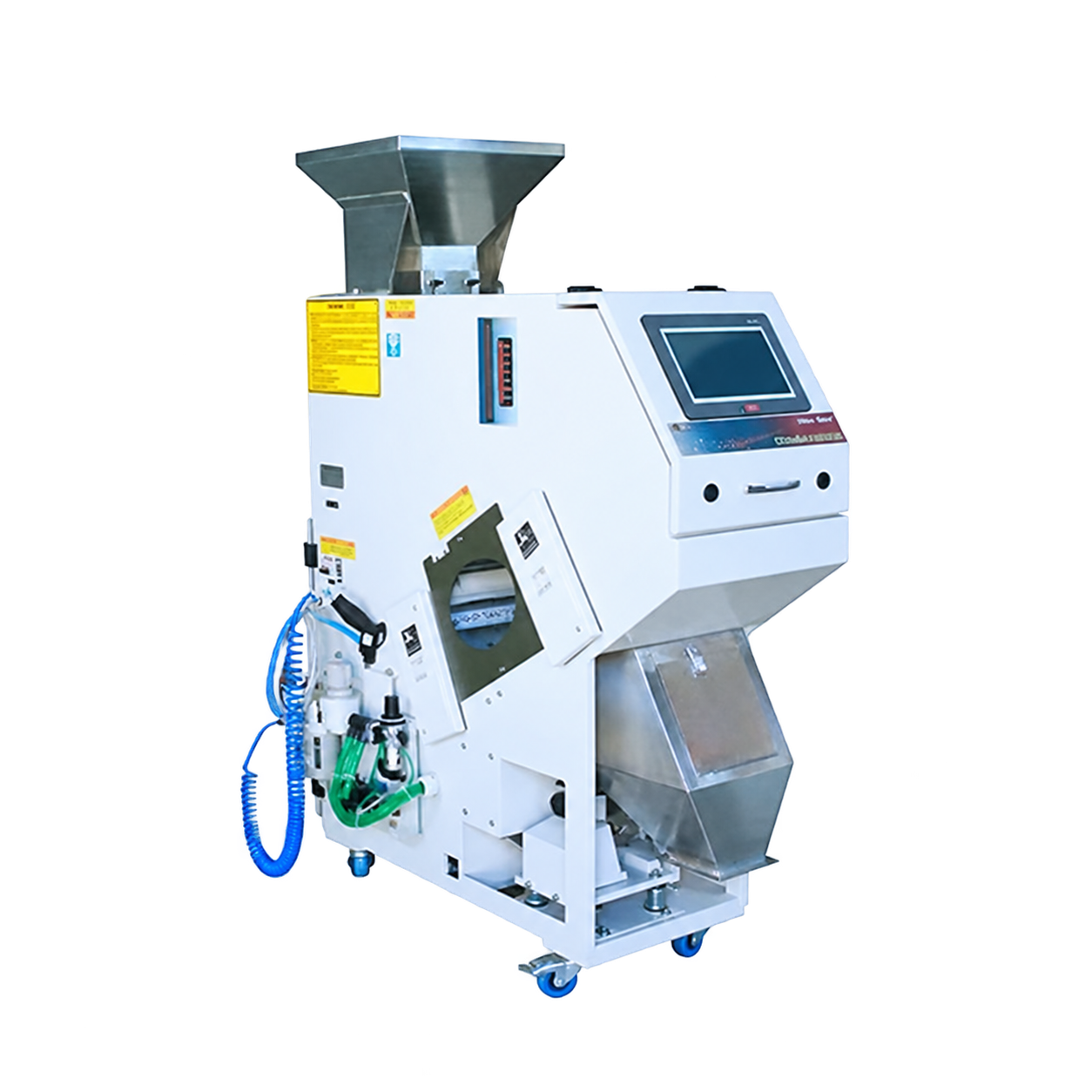
Explore image processing →Classification and timed air-jet ejection separate the selected material. Chute and belt platforms present different materials for inspection.
Find your material solution →The cutaway explains a general optical-sorting architecture. Confirm the sensor, processing hardware and recognition features fitted to your chosen configuration with MARK.
A closer look at sensing, programmable processing and mechanical design. The sensor photograph and processor illustration explain the concepts; the engineering photograph comes from MARK.
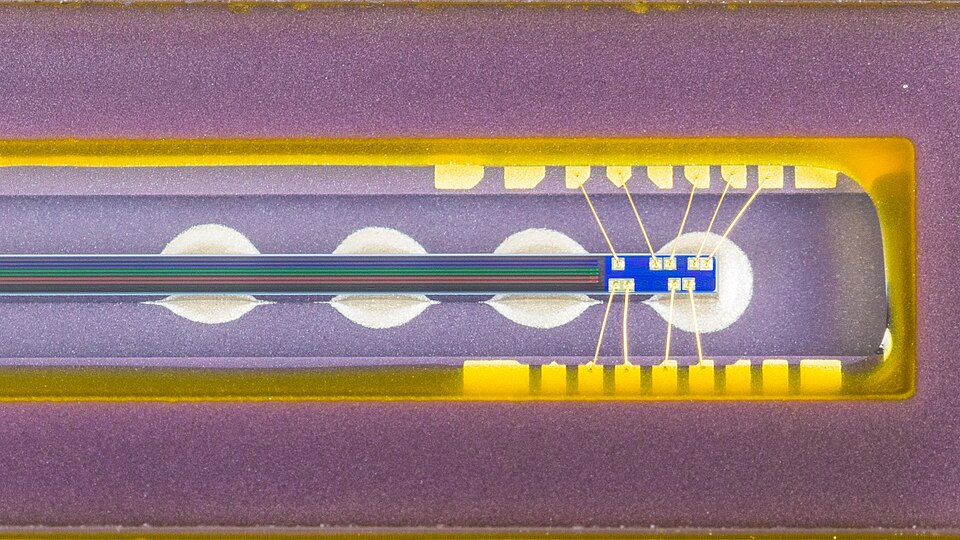
A colour linear CCD converts incoming light into electrical signals. Red, green and blue channels provide the colour measurements that an imaging system can analyse.
Sony ILX561K linear CCD from an Epson Perfection V330 scanner.
Photo: Raimond Spekking · CC BY-SA 4.0
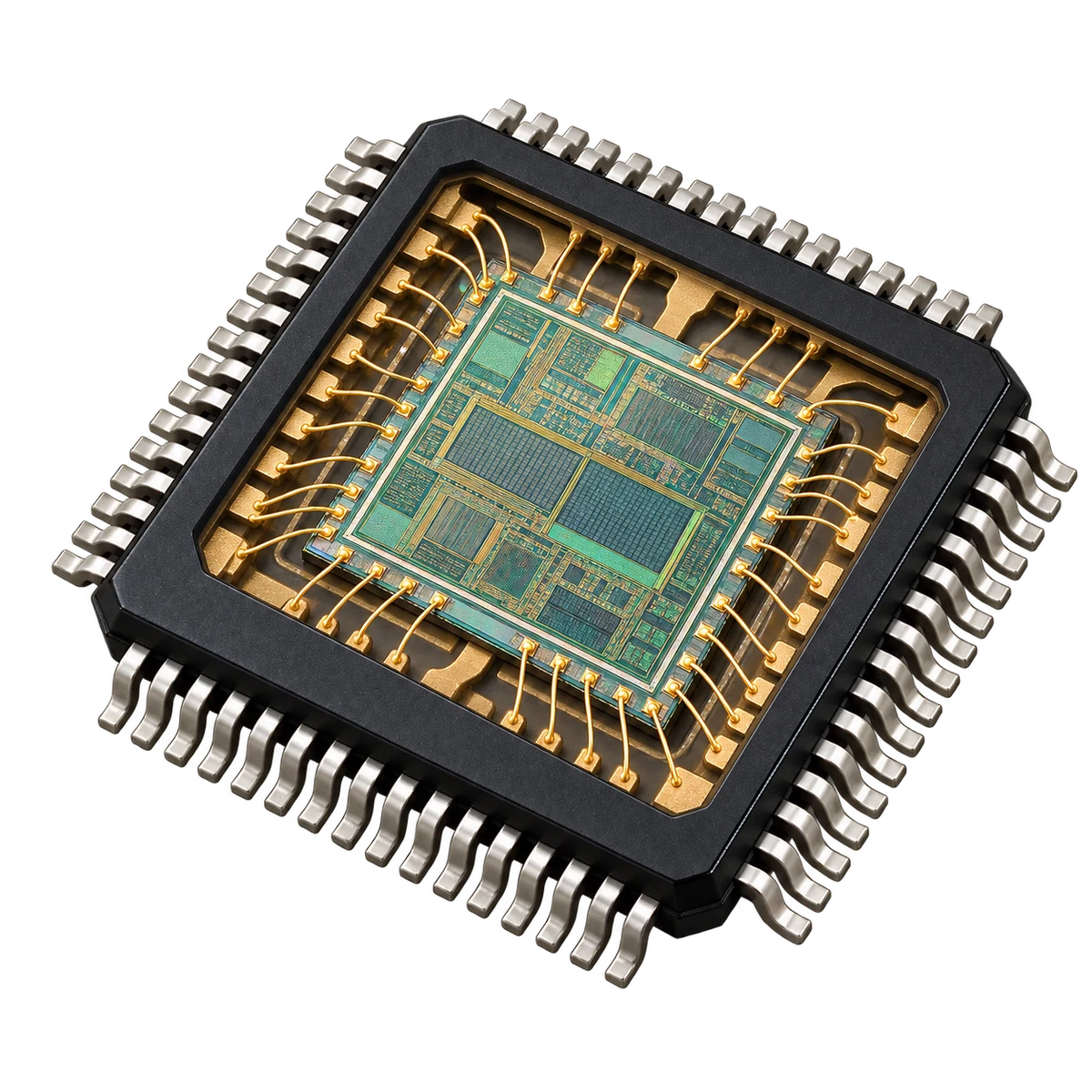
A field-programmable gate array is a programmable processing device. Parallel logic can handle image data and classification tasks with consistent timing; the FPGA processes sensor signals rather than sensing light itself.
Illustrative processor cutaway; not a specific MARK component.
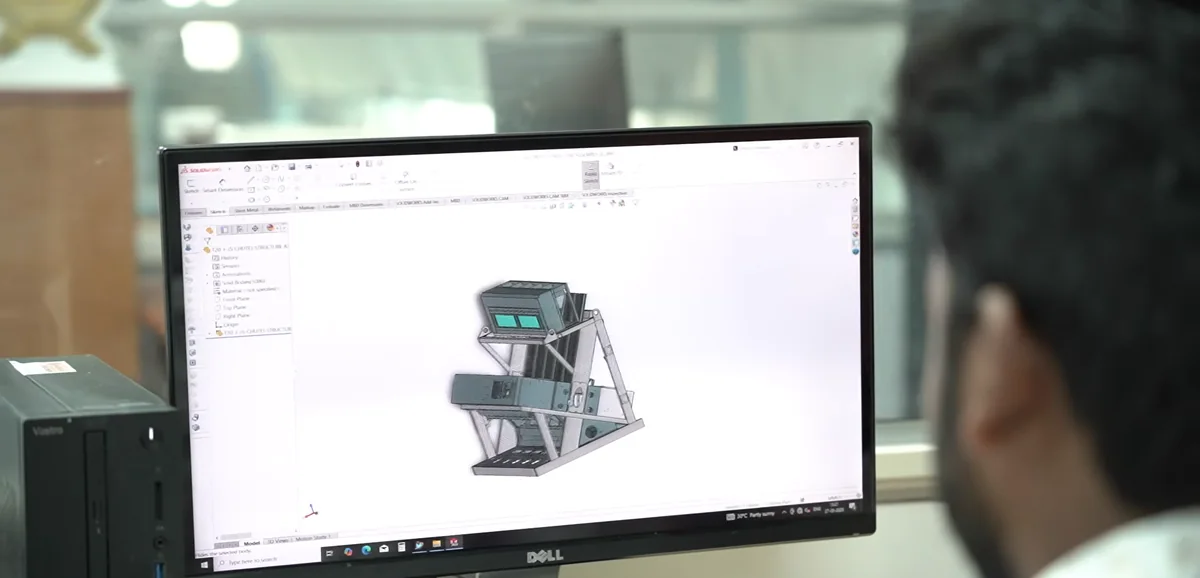
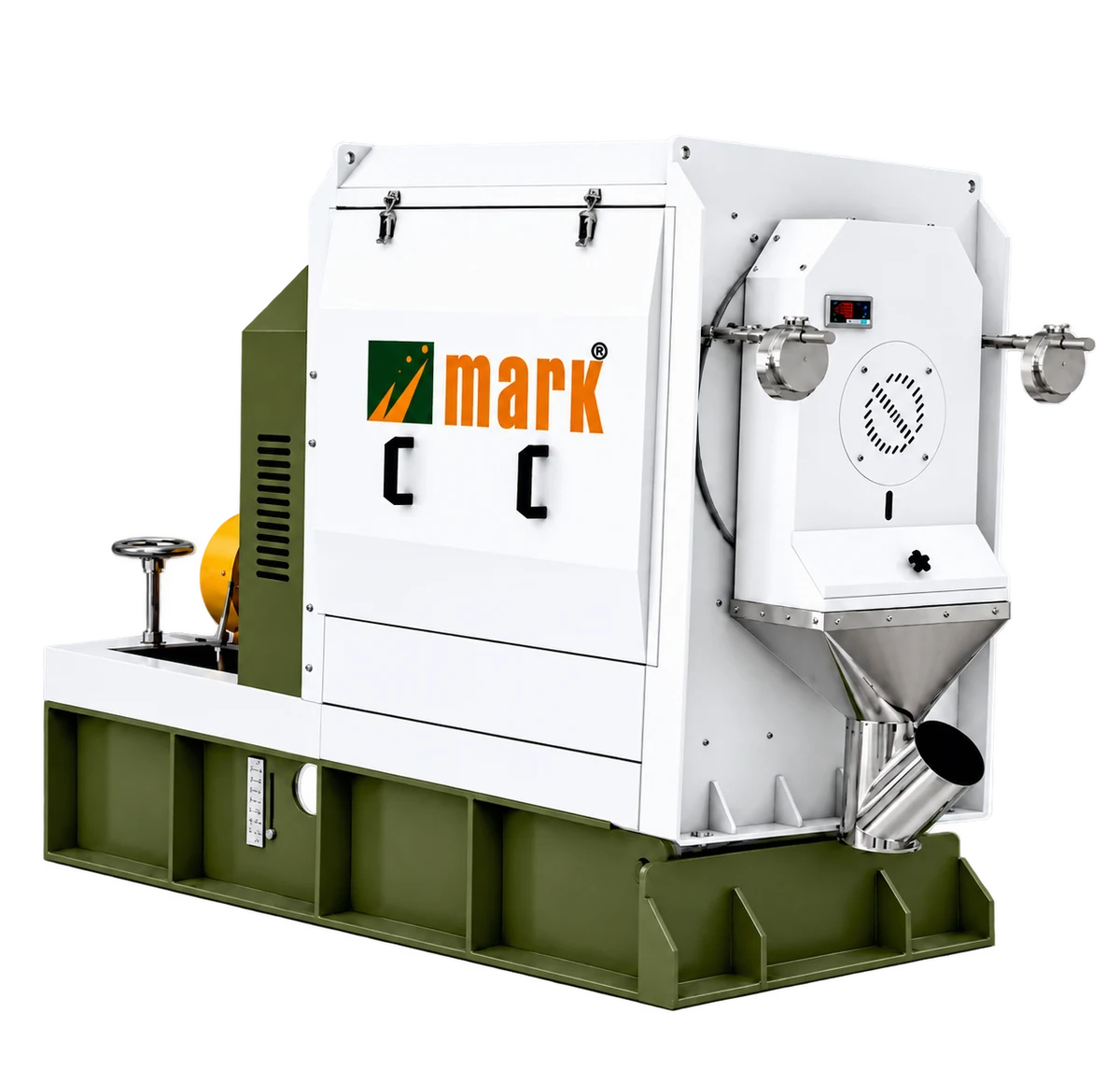
The frame, feed system, chutes and collection paths shape how material moves through the machine. Mechanical design brings these elements together so inspection, separation, access and maintenance fit the intended process.
Mechanical design at MARK.
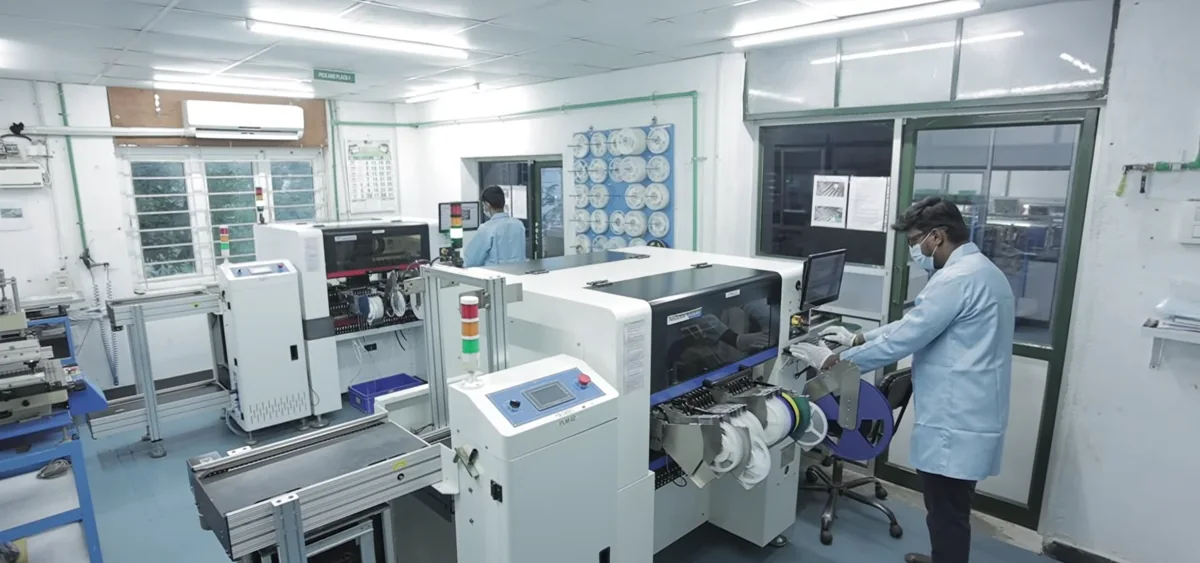
See the engineering work, electronics production, fabrication and assembly behind the MARK range.
Inside our company →An even product stream gives the inspection system a consistent view.
Lighting and RGB imaging reveal visible differences in each product.
The machine compares colour or image features against its sorting settings.
A synchronized rejection signal directs unwanted material away from the accepted stream.
A general explanation of optical sorting. Hardware, recognition features and settings vary by model. Consult the official technical documents for your selected machine.
Explore RGB pixel processing, image processing and belt sorting technology in the MARK range.
Technology
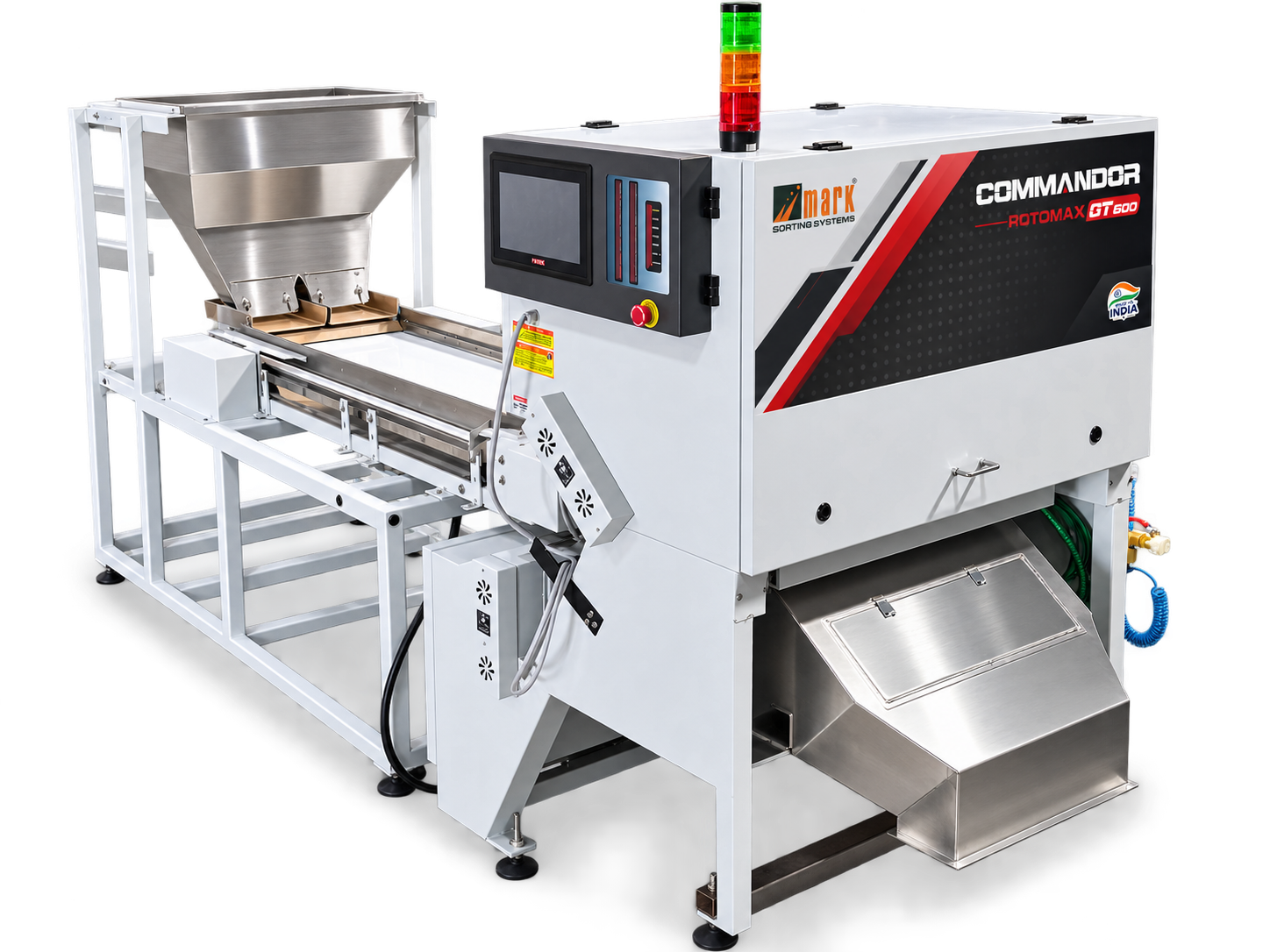
Controlled belt presentation for makhana, chilli, nuts and garlic with ROTOMAX GT.
View details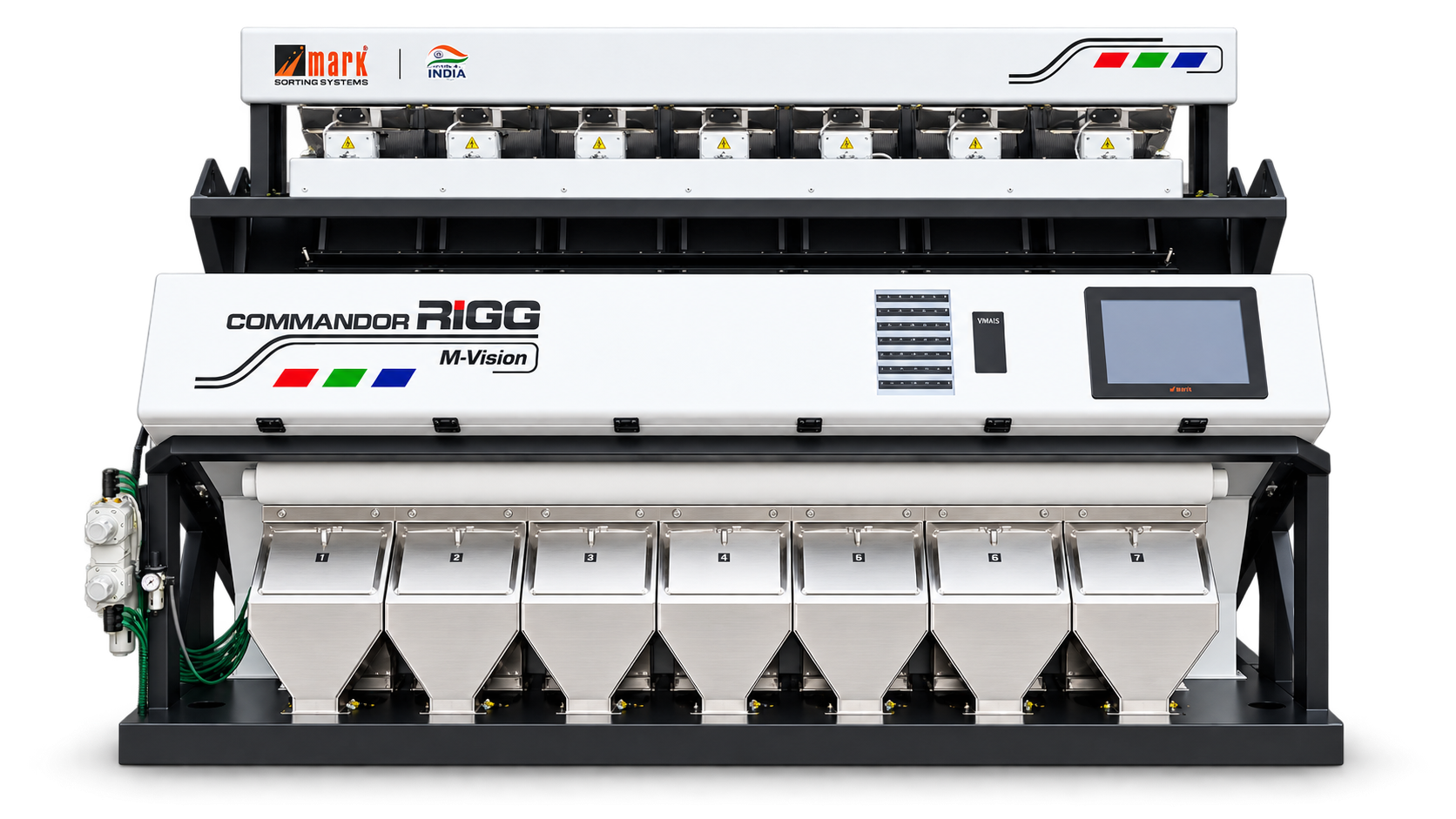
Technology
COMMANDOR Square for intelligent pixel-based sorting; RIGG for specialist size and hole recognition.
View details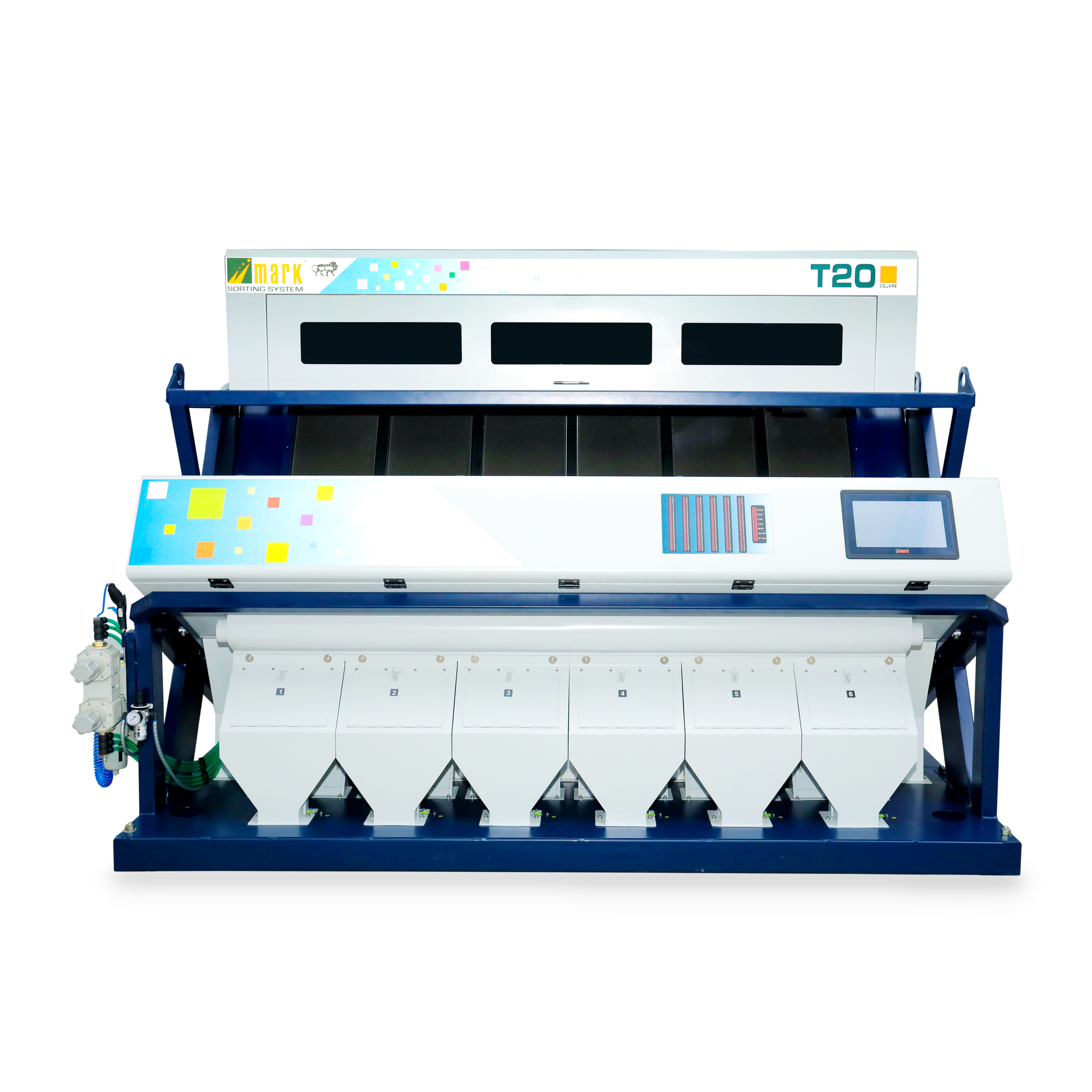
Technology
Colour sensing and pixel processing for T20 Square rice and wheat applications.
View details